31 January 2013

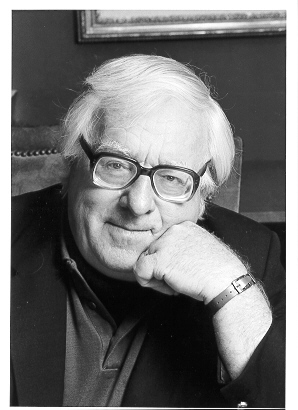
The great Ray Bradbury advised authors to write a short story a day.

Don't have time? Then try a little Flash Fiction. Encounters in Paris is totally a collection of Flash. As I work to improve my own writing, here's what I've learned about FF so far!  Head over to the #NovelSpaces blog to find out more!

“…Write a short story in one day so it has a skin around it, its own intensity, its own life, its own reason for being.”Ray Bradbury

I couldn’t agree more with the venerable American science fiction author, Ray Bradbury.  Writing short stories is, indeed, its own art form. By writing one short story daily, a writer cannot help but become more skilled in his/her craft.  Short stories provide authors with opportunities to create thoughtful, introspective prose.  In that process of creation, authors develop characters, settings and plots with laser-like precision.

However, writing flash or micro fiction (a work between 500 to 2,500 words) is even more challenging because telling a complete story, utilizing few words means that each word must be carefully selected.  Every word must show and tell. And, isn't that what high school English teachers preach to students, anyway?  Stylistically, flash fiction allows an author to say their piece, get off the page and move on to another story. It's the perfect way to train and keep writing until inspiration for a longer work hits.

Sometimes getting started can be very difficult, so here are some tips to get the creative juices flowing:

  1. Start in the middle of the story.  There isn't a lot of time to set elaborate scenes or build characters.  Jump right into the center of the conflict and build the rest of the story from there. 
  2.  Limit your location and setting.  Make the reader feel as if they are stepping into a precise moment in time and participating with the characters in their own world. 
  3. Avoid becoming an interloper. Instead, act if you are eavesdropping on an illicit conversation and write your story as if this is the case.
  4. Don't use too many characters.  One or two characters are perfect for flash fiction because you don’t have time to describe your characters in intricate detail.  Sometimes even giving the character names is too much, so don’t – unless the name conveys additional story information or saves your word count.
  5. The last sentence is the ticket.  The last sentence of the story is an extraordinary opportunity to make the reader think.  It's not the end of the story, but instead the beginning.  This is the place where the reader starts to process what they have just read, and as a result, he or she may experience a wave of emotions (happiness, anger, sadness, confusion, etc.)  As writers this is our goal. 
So the next time you experience an intense desire to write a story -- especially a short one, follow Mr. Bradbury’s advice: “…Get it down…There’s a reason why the idea occurred to you at that hour anyway, so go with that and investigate it.”  

Posted on Thursday, January 31, 2013 by Unknown

No comments

01 March 2012


Fictional Tales Examines Clandestine Meetings and Confessions

Author Carolyn Moncel Releases Railway Confessions – A Collection of Short Stories


LAUSANNE, SWITZERLAND, March 1, 2012 — Would you ever reveal a dark secret to a complete stranger – even if you knew you’d never meet that person again? This question is at the heart of author, Carolyn Moncel’s latest work, Railway Confessions – A Collection of Short Stories.  Currently available as an eBook only, readers can download a FREE copy on March 1 and March 8, 2012 from Amazon.com (http://amzn.to/zYc4od).
Railway Confessions - A Collection of Short Stories by Carolyn Moncel
As passengers traveling aboard a TGV train from Paris to Geneva one summer evening, three couples casually disclose very intimate, truthful details that could potentially transform their lives either for the better or for the worst.
“The stories fit perfectly into the advice my mother gave me during my childhood,” says Moncel, a Chicago native, whose stories are often set in Paris.  “‘Be careful what you say aloud because: a) you never really know who you are talking to; and b) you never really know who is listening to your conversation and what they may know about the people being discussed.’”
In the story, "My Brother's Keeper," a couple must come to terms with the murders that each of them had a hand in committing and their aftermaths; In "A Choice in the Matter," another couple must address the questions of wanted and unwanted pregnancies and the circumstances for which such requests are ever acceptable; and in the last story entitled, “Pretty Prisons,” a last couple must deal with love, infidelity and all of its complexities. Ellery Roulet and Lola Sanchez from 5 Reasons to Leave a Lover return, and along with four others, confront their deepest fears with unexpected results.


About Carolyn Moncel
Carolyn Davenport-Moncel currently resides in Lausanne, Switzerland with her husband and two daughters. Her previous work includes Encounters in Paris – A Collection of Short Stories and 5 Reasons to Leave a Lover – A Novella and Other Short Stories.  Visit Moncel’s website at:  www.carolynmoncel.com.  Follow her on Facebook:  http://www.facebook.com/carolyn.moncel; LinkedIn: http://www.linkedin.com/in/motiontemps; and on Twitter:  http://twitter.com/carolynmoncel.
About Railway Confessions – A Collection of Short Stories
Published in February 2012 by Mondavé Media, Railway Confessions – A Collection of Short Stories is only available as an eBook.  Amazon.com (http://amzn.to/zYc4od).The Kindle edition is $2.99.  The ASIN number is: B0076BLY42.  Ms. Moncel is available for appearances, book club discussions and interviews.
# # #

Posted on Thursday, March 01, 2012 by Unknown

No comments

15 February 2012

“Chérie, I must say that your people place way too much emphasis on affairs.” 

These words are uttered by a male French character in my upcoming collection of short stories called Railway Confessions. I think his response generally encapsulates well what the French, in particular, may think about Americans when it comes to at least one of the reasons highlighted in my book, 5 Reasons to Leave a Lover. 

To recap 5 Reasons to Leave a Lover is my second book, and it’s a collection containing a novella and two short stories focusing on love and lost. American Ellery Roulet and her French husband, Julien, from my first book, Encounters in Paris, return— this time involved in an emotionally-charged love triangle, and along with two other couples, explore how different types of love relationships splinter due to abuse,ambivalencedeceptioncheating and even death

It’s a very realistic collection. In addition to finding inspiration in Paul Simon’s song, “50 Ways to Leave a Lover,” other scandals including that of former South Carolina governor Mark Sanford and former International Monetary Fund (IMF) Director, Dominique Strauss-Kahn (DSK) were influential . But also on the other side of the spectrum, couples like Bill and Camille Cosby who have been married for over 45 years or the late Paul Newman and Joanne Woodward who were also married well over 40 years had an effect on the stories created as well. However, the most revealing insight came after interviewing ordinary people (both French and American) who were just trying to make it through their marriages each day. I came to realize that maintaining relationships is hard and downright complicated. 

Now cheating is an uneasy subject to be sure; fraught with complexity, but it is also one topic that I do like to discuss because it generates such a strong reaction among readers. It also perfectly illustrates some vast differences between French and American cultures. 

About five years ago American journalist and Parisian resident Pamela Druckerman wrote an intriguing book called Lust in Translation where she examined how cheating in general was viewed around the world. A lot of what she wrote about French culture and their reactions to infidelity was basically correct. Both the French and Americans cheat at relatively the same rate but how each culture deals with the problem itself is quite different. While Americans may view infidelity as both a personal and spiritual assault, the French tend to replace morality with rationality. For instance, an American may look at the situation of infidelity and conclude, “my spouse cheated and now my marriage and life are over.” 

Conversely, a French person may look at the same circumstances and come to a different conclusion: “my spouse cheated, but my marriage may not be over and my life certainly isn’t.” I think the French often view infidelity as an inevitable occurrence – especially over a long life span of a relationship). Whereas an American woman may confront her spouse, the French woman, by contrast, may not. She may not want to jeopardize her quality of life or status. Keeping quiet could give her a chance to win her husband back or select her moment and means of retaliation. 

Whether one is discussing cheating or any of the other four reasons, the perspectives are roughly the same: a person will leave (either literally or figuratively) a relationship if it becomes impossible to stay. Americans may find any one of these transgressions grounds for leaving a relationship. However, as one French friend revealed, priority is placed upon the deed, so deception would be at the top of their list of transgressions while cheating would be considered the least offensive act of all. 

Maybe the interview that I conducted with an elderly French woman explains it all. She told me that in the 60 years that they had been married, she and her husband had been through everything together and had weathered the storms. She said ‘When you get as old as we are and death is near, you are not thinking about who cheated on whom. It’s more about did you really enjoy one another while you still had the chance. Everything else is irrelevant.’ The bottom line here is this. A person can leave a relationship any time they want but that doesn’t make the decision to do so any easier. Honestly at the end of the day, people can say hypothetically what they would or wouldn’t do if presented with any of these five reasons, but no one really knows what path they would take until it happens to them. 

Posted on Wednesday, February 15, 2012 by Unknown

No comments

12 February 2012

As St. Valentine’s Day approaches, what better time is there to talk about love, right?  

I’m not talking about just any kind of love:  love between a man and a woman, a woman and her child or even a man and his dog.  Instead, I’m talking about a love that is a lot harder for non-writers to understand.  It’s a romance that can only be shared between author and his/her character.  

Take for example, my character, Julien Roulet.  I know him better than anyone and because of this, I am utterly and completely in love with him.  Julien looks and acts nothing like my own husband in real life and that’s part of the fun.  However, he is a rough composite of all of the French men that I have known over the last five years while living and working Paris.  He is an elusive lover; distant and slightly mysterious.  Tall and slim with brown hair and sparkling green eyes, he’s handsome, intelligent, creative, quick witted and tad bit irreverent.  A French man who refuses to pronounce the letter “h” when speaking in English, he’s also married and a devoted family man.  He’s far from perfect though – an insecure, rakish, adulterer in fact.  And yet at the same time, he’s a good guy who is still deeply in love with his wife. Unfortunately, he now finds himself in an impossible situation and saving him remains my toughest challenge.  Oh, the complexity! 

So exactly when do we find time to rendezvous, you ask?  It usually starts in my dreams at night.  His thoughts come to me in hushed tones,  preventing  me from getting a good night’s sleep.  When he signals to me that he needs to talk urgently, I wake up, crack open my laptop and type the sweet words he needs to convey .  Our relationship heightens as we communicate – author to character via the dialogue.  He tells me everything that people around him need to know and I happily dictate his demands.  Then, like all other love affairs, the relationship fizzles once there is nothing left to write.

As authors we experience a whole host of emotions while creating characters.  Just like in real life, we take up their hobbies, research their professions, record their fickle likes and dislikes, all in an attempt to better understand them.  When all is going well between us, we can’t wait to visit them in their imaginary world each day.   One minute we’re laughing at all of their jokes and the things that they do.  And the next, we’re infuriated and downright embarrassed by their behavior.  We know when they’re happy, sad, or frustrated.  When they long for another character, sometimes we get jealous.  When they abandon us because they yearn for independence and space,  we become fearful because we never know which direction they will take our story.  Finally, we’re downright depressed when we have to leave them because their story has come to an end. 

The point to all of this is this.  Creating characters for which there is genuine affection is what makes writing fun and rewarding. Whenever we are able to achieve that level of love for our character, our readers are the true beneficiaries.  If we’re really lucky, the reader will fall in love with the character as well.  And the best part for me?  Whenever I want to spend time with the number one man in my fictional world, I have my husband’s blessing.  If you ask me, this is the best type of ménage à trois there is. 


Happy Valentine’s Day, everyone!  And remember if you can’t spend the day with a loved one, then fall in love with a good book!  

Posted on Sunday, February 12, 2012 by Unknown

No comments

03 January 2012


For me it all started with an entry into last year’s “Three-Minute Fiction” Contest on National Public Radio (NPR). 

 Essentially, thousands of writers around the country (and a few of us outside of the United States) submit a work of fiction, a short story that must be exactly 600 words – no more and no less. For many writers (me included) this can be a very intimidating challenge.

However, I would contend that entering that contest was the best thing that I could have ever done to jumpstart my career in writing fiction. In fact, not only did I rediscover a love for both reading and writing short stories but I also gained an even greater admiration for those authors who specifically select short story writing as their medium for self expression. But, when it came to writing flash fiction, I had some reservations. Since 2000 I had been writing short online articles designed to help small-business owners handle their own PR in house. Therefore, I felt completely confident keeping my stories around 600 words, which is the optimum length that experts speculate readers feel most comfortable skimming from their computer screen or mobile devices.

Writing a short information piece is one thing but trying to tell a fictional story in the same number of words is a different story entirely. There was one other remaining doubt: how to get around the fact that a lot of readers simply prefer longer novels to short works of fiction. Some readers reject all short fiction because it is just that – too short unfortunately. By the time they are drawn into the story and make a commitment, suddenly, it is over. The only way I can get around these obstacles is to explain, from an author’s point of view, why I enjoy writing short stories – particularly flash fiction:
  • It provides opportunities to create thoughtful, introspective stories. As an author, if you can capture the reader’s attention and help them escape to a new world -- even for a short time – and change them in the process, you’ve done your job.
  • It sharpens the writing. Telling a complete story utilizing few words means that each word used must be carefully selected because of the feelings that it conveys (in other words, every word must tell). Isn’t that what high school English teachers preach to students anyway?
  • Stylistically, it allows an author to say their peace, get off the page and move on to another story. It’s the perfect way to train and keep writing until inspiration for a longer work hits.

So what does the reader get out of this experience in return? Short stories that are:
  • Extremely brief and easily digestible in one sitting.
  • Quickly downloadable from eBook readers or smart phones (a perfect format for people constantly on-the-go.)
  • Emotionally driven and invite readers to take a peek inside of the lives of others. For a brief moment in time, the reader becomes the interloper within a conversation between characters.
  • Also Affordable – period.

So the next time you run across a flash fiction work by an author, seriously consider giving the story a chance. Who knows? It just might turn out to be the best little piece of fiction you’ve ever read in your life. Or, it could be just a pleasant introduction to a previously unknown author.

And by the way, according to my word count, this article (including title and byline) is exactly 600 words – no more and no less!

Posted on Tuesday, January 03, 2012 by Unknown

No comments

23 November 2011

I have a lot to be thankful for this holiday season.  In addition to having a wonderful family, terrific friends, and a fulfilling career, I have this new vocation in my life – writing fiction, which allows me each day to create an imaginary world of interesting characters.  

Now in my world characters usually are ordinary people who find themselves in some very complicated situations.  While these “people” definitely possess major character flaws, no one is ever absolutely good or bad. Displaying these gray areas and making my readers think is what makes writing fun for me. 

However, when I am free and I’m in a mood for a particular type of book, there are times when the only acceptable selection is one that contains a truly evil character.  You know the ones:  Mr. Hyde from Robert Louis Stevenson’s Strange Case of Dr. Jekyll and Mr. Hyde; Jean-Baptiste Grenouille from Patrick Suskind’s Perfume, or Anne Wilkes from Steven King’s Misery.  If you look hard enough you can find a truly evil character in almost any genre.   One of my recent favorites is Tony Hobbs in Douglass Kennedy’s A Special Relationship.  While he’s certainly no Hannibal Lecter, the way that he treats his wife is pretty terrifying nonetheless.  I could go on forever but these are all memorable characters readers just love to hate.  I think readers adore them so much because their stories remind readers that their own humanity is still intact.  It’s a confirmation that the reader is still okay.  Or maybe entering into the evil characters’ world is the only time that readers are allowed to delight in pure evil without others thinking they need their own heads examined.  Whatever the reason, it is my dream to one day create such a character of my own because I think it would be a lot of fun.  I just hope my readers never get the impression that I really do have dozens of bodies buried in my cellar.

I don’t think I am qualified yet to say what makes evil characters great from an author’s point of view, but I can tell you what I think from a reader’s perspective.  To me, authors throughout history who have successfully created evil characters have one thing in common:  They manage to find that tiny morsel of humanity in each character, and that is not an easy thing to do.  Assigning evil deeds to a character is easy; but try making that same character normal and relatable to any rational person – at least on the surface, and one can see why writing truly is an art form.

Why Bad Characters Can Be Good Fun

  • They can seem normal on the surface but as the author peels away the layers and reveals the true character, the reader finds a deeply disturbed person. 
  • Their actions can seem justifiable or arguably deserving, but maybe taken just a little too far.
  • They can get away with doing things that the average reader wishes he/she could do.
  • It’s the only time when it could be fun to be or act crazy and when the reader tires of that world, they can always leave.
The point to all of this is all writing is hard work; creating truly three-dimensional, fully-formed evil characters is even harder.  That tiny bit of humanness is not only a reflection of the author but of the readers as well. That’s what makes characters like these so memorable and at times beloved. 

So as we all sit down to give thanks this holiday season, let us give silent praise to those talented authors who awaken our imagination and remind us that sometimes it is good to be bad.

Posted on Wednesday, November 23, 2011 by Unknown

No comments

31 August 2011

In "5 Reasons to Leave a Lover", author Carolyn Moncel offers up a fresh batch of stories based on love and loss.  As singer/songwriter, Paul Simon so eloquently suggested in a famous song from the 1970s, there are many ways to leave a lover.  However, Moncel's characters demonstrate that the reasons for leaving in the first place are quite finite.

Encounters in Paris` Ellery and Julien Roulet return, picking up their lives after the short story, "Pandora`s Box Revisited."  This time the Roulets are involved in a love triangle, and along with two other couples, must explore how love relationships are affected and splinter due to abuse, ambivalence, deception, cheating and death. This bittersweet collection of tales proves that some breakups are necessary; while others are voluntary; and still others are simply destined and beyond anyone's control.


Posted on Wednesday, August 31, 2011 by Unknown

No comments