Showing posts with label Writing. Show all posts

31 January 2013

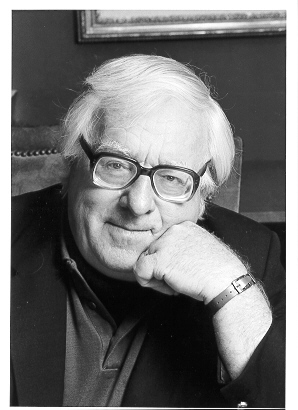
The great Ray Bradbury advised authors to write a short story a day.

Don't have time? Then try a little Flash Fiction. Encounters in Paris is totally a collection of Flash. As I work to improve my own writing, here's what I've learned about FF so far!  Head over to the #NovelSpaces blog to find out more!

“…Write a short story in one day so it has a skin around it, its own intensity, its own life, its own reason for being.”Ray Bradbury

I couldn’t agree more with the venerable American science fiction author, Ray Bradbury.  Writing short stories is, indeed, its own art form. By writing one short story daily, a writer cannot help but become more skilled in his/her craft.  Short stories provide authors with opportunities to create thoughtful, introspective prose.  In that process of creation, authors develop characters, settings and plots with laser-like precision.

However, writing flash or micro fiction (a work between 500 to 2,500 words) is even more challenging because telling a complete story, utilizing few words means that each word must be carefully selected.  Every word must show and tell. And, isn't that what high school English teachers preach to students, anyway?  Stylistically, flash fiction allows an author to say their piece, get off the page and move on to another story. It's the perfect way to train and keep writing until inspiration for a longer work hits.

Sometimes getting started can be very difficult, so here are some tips to get the creative juices flowing:

  1. Start in the middle of the story.  There isn't a lot of time to set elaborate scenes or build characters.  Jump right into the center of the conflict and build the rest of the story from there. 
  2.  Limit your location and setting.  Make the reader feel as if they are stepping into a precise moment in time and participating with the characters in their own world. 
  3. Avoid becoming an interloper. Instead, act if you are eavesdropping on an illicit conversation and write your story as if this is the case.
  4. Don't use too many characters.  One or two characters are perfect for flash fiction because you don’t have time to describe your characters in intricate detail.  Sometimes even giving the character names is too much, so don’t – unless the name conveys additional story information or saves your word count.
  5. The last sentence is the ticket.  The last sentence of the story is an extraordinary opportunity to make the reader think.  It's not the end of the story, but instead the beginning.  This is the place where the reader starts to process what they have just read, and as a result, he or she may experience a wave of emotions (happiness, anger, sadness, confusion, etc.)  As writers this is our goal. 
So the next time you experience an intense desire to write a story -- especially a short one, follow Mr. Bradbury’s advice: “…Get it down…There’s a reason why the idea occurred to you at that hour anyway, so go with that and investigate it.”  

Posted on Thursday, January 31, 2013 by Unknown

No comments

03 January 2012


For me it all started with an entry into last year’s “Three-Minute Fiction” Contest on National Public Radio (NPR). 

 Essentially, thousands of writers around the country (and a few of us outside of the United States) submit a work of fiction, a short story that must be exactly 600 words – no more and no less. For many writers (me included) this can be a very intimidating challenge.

However, I would contend that entering that contest was the best thing that I could have ever done to jumpstart my career in writing fiction. In fact, not only did I rediscover a love for both reading and writing short stories but I also gained an even greater admiration for those authors who specifically select short story writing as their medium for self expression. But, when it came to writing flash fiction, I had some reservations. Since 2000 I had been writing short online articles designed to help small-business owners handle their own PR in house. Therefore, I felt completely confident keeping my stories around 600 words, which is the optimum length that experts speculate readers feel most comfortable skimming from their computer screen or mobile devices.

Writing a short information piece is one thing but trying to tell a fictional story in the same number of words is a different story entirely. There was one other remaining doubt: how to get around the fact that a lot of readers simply prefer longer novels to short works of fiction. Some readers reject all short fiction because it is just that – too short unfortunately. By the time they are drawn into the story and make a commitment, suddenly, it is over. The only way I can get around these obstacles is to explain, from an author’s point of view, why I enjoy writing short stories – particularly flash fiction:
  • It provides opportunities to create thoughtful, introspective stories. As an author, if you can capture the reader’s attention and help them escape to a new world -- even for a short time – and change them in the process, you’ve done your job.
  • It sharpens the writing. Telling a complete story utilizing few words means that each word used must be carefully selected because of the feelings that it conveys (in other words, every word must tell). Isn’t that what high school English teachers preach to students anyway?
  • Stylistically, it allows an author to say their peace, get off the page and move on to another story. It’s the perfect way to train and keep writing until inspiration for a longer work hits.

So what does the reader get out of this experience in return? Short stories that are:
  • Extremely brief and easily digestible in one sitting.
  • Quickly downloadable from eBook readers or smart phones (a perfect format for people constantly on-the-go.)
  • Emotionally driven and invite readers to take a peek inside of the lives of others. For a brief moment in time, the reader becomes the interloper within a conversation between characters.
  • Also Affordable – period.

So the next time you run across a flash fiction work by an author, seriously consider giving the story a chance. Who knows? It just might turn out to be the best little piece of fiction you’ve ever read in your life. Or, it could be just a pleasant introduction to a previously unknown author.

And by the way, according to my word count, this article (including title and byline) is exactly 600 words – no more and no less!

Posted on Tuesday, January 03, 2012 by Unknown

No comments